



From Sacred Site to Community: New Discovery Reveals a Broader Picture of Life on Selja
For centuries, Selja has been known as Norway’s oldest pilgrimage site dedicated to a saint and as an important religious centre during the Middle Ages. Now, investigations have uncovered the remains of yet another previously unknown structure outside the monastery complex.
The discovery strengthens the emerging picture that far more activity took place on the island than the ruins alone have revealed, and it marks the third major find at the site in just a few years.
New Discovery on Selja Reveals an Unknown Life Beyond the Monastery Walls
The Selja monastery and pilgrimage site at Stad Municipality has been studied and documented by researchers, heritage specialists, and archaeologists for nearly 200 years. Yet the island continues to surprise.
In recent years, NIKU building archaeologist Regin Meyer, working closely with specialists in digital archaeology, has uncovered several previously unknown buildings and structures connected to the medieval complex. Another discovery can now be added to that list.
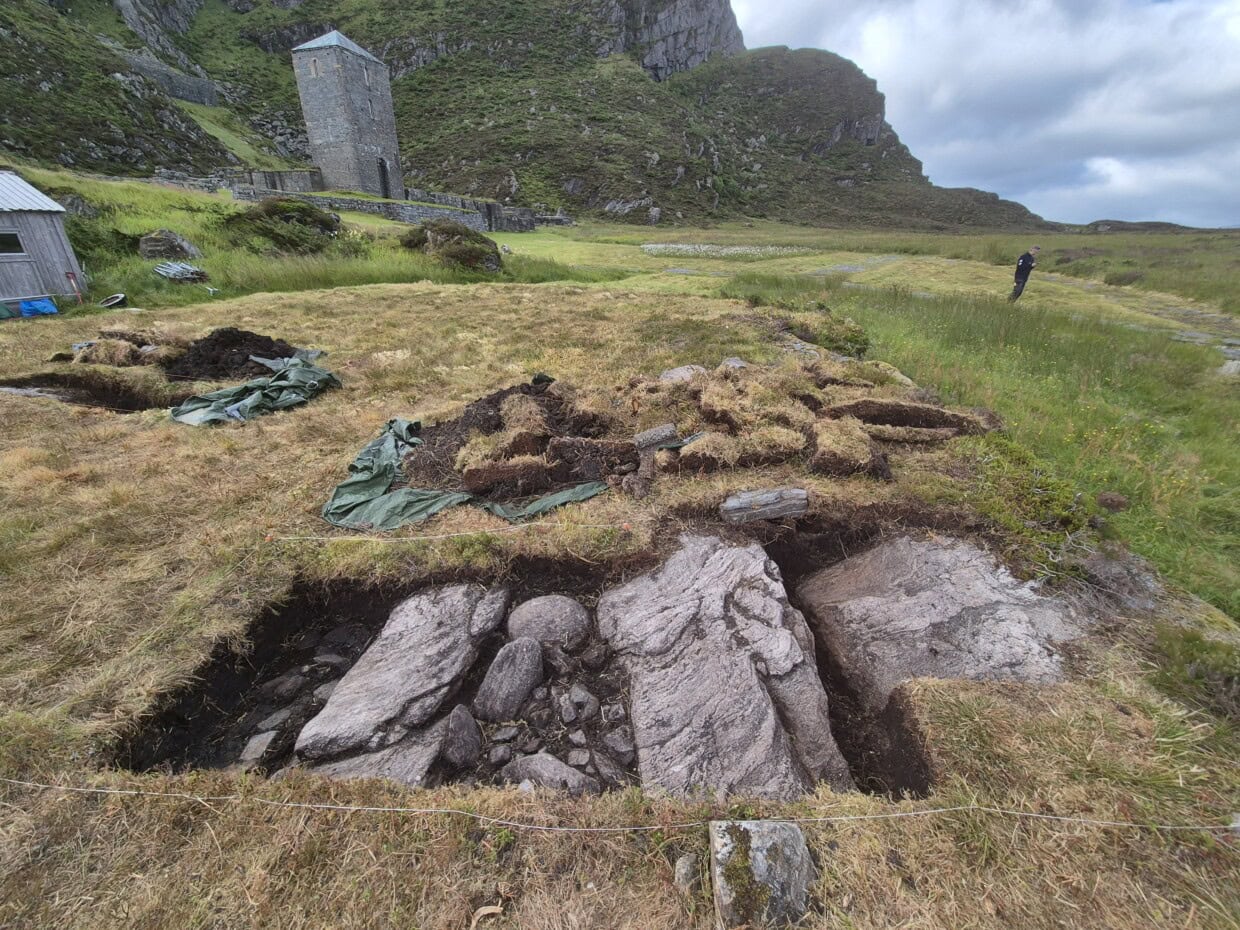
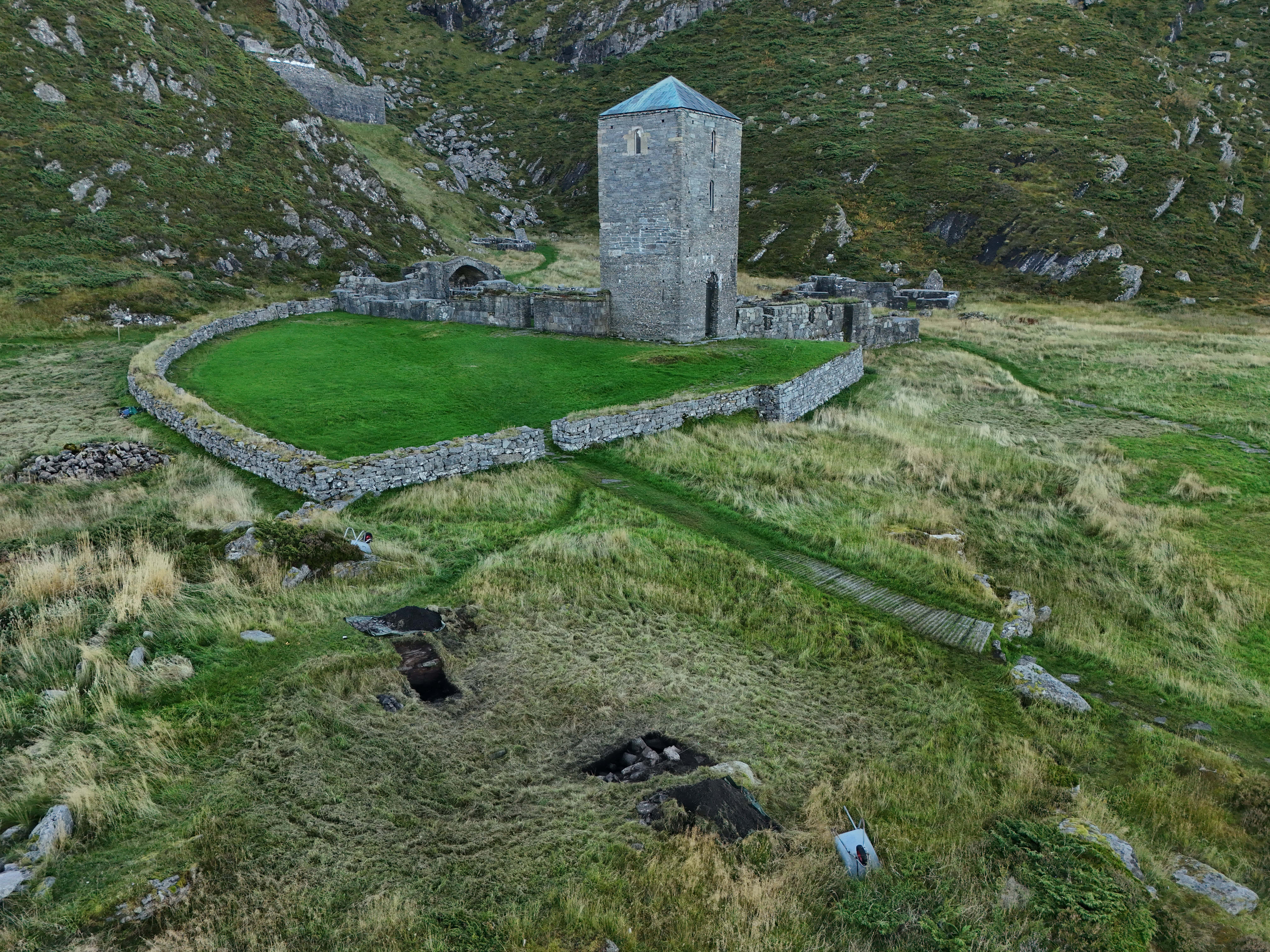
The newly identified structure is located outside the known monastery walls. It consists of a substantial stone wall foundation which, according to ground-penetrating radar data, extends from the harbour area and at least thirteen metres southward across the terrain.
“The wall is two metres thick which indicates a very substantial construction,” says Meyer.
So far, only parts of the wall have been investigated. The structure continues below ground, and researchers do not yet know its full extent.
Selja Monastic and Pilgrimage Site
- Location: Selja, Stad Municipality, Vestland County, Norway.
- Historical Significance: Home to Norway’s oldest known saintly cult, initially associated with the Selja Men (Seljemennene) and later with the legend of St. Sunniva.
- The Saint’s Legend: According to the saga tradition, Sunniva and her companions were shipwrecked on Selja in the mid-10th century. They took refuge in a cave, where they died as martyrs.
- Ecclesiastical Development:
- Olav Tryggvason is said to have discovered holy relics on the island and built a church there in 996.
- Olav Haraldsson (later St. Olav) arrived at Selja from England in 1015 in connection with the Christianisation of Norway and his claim to the throne.
- The Feast of the Selja Men (Seljumannamessa) was reportedly established in 1024.
- Around 1068, Olav Kyrre established Western Norway’s first bishopric on the island.
- Monastic Complex: The Benedictine monastery was gradually expanded throughout the 12th, 13th, and 14th centuries.
- St. Sunniva’s Church: The ruin contains evidence of an earlier stone church with Anglo-Saxon features, possibly Norway’s very first stone church.
Age and Function Remain Unknown
At present, it is too early to determine the building’s function.
Researchers don’t know whether it can be linked to the Benedictine monastery, to the bishopric established on Selja in the 11th century, or to the earliest phase of the sacred site associated with the cult of the Selja men.
Meyer has collected both datable material and soil samples from the area. The aim is to establish the age of the structure and gain further insight into the activities that took place there.
“Hopefully, the analyses will help us understand both the date and function of the structure, and the role it may have played in the development of the site,” he says.
The Discovery Changes Our Understanding of the Site
Selja is one of Norway’s most important medieval sites. The island is associated with Saint Sunniva, the Selja martyrs, and the early Christianisation of Norway, eventually developing into a bishopric, pilgrimage destination, and monastery complex.
Traditionally, attention has focused on the large ruins that still dominate the landscape. Recent investigations, however, show that the site was more extensive than previously assumed.
The newly discovered structures form part of a pattern of findings that are gradually expanding our understanding of the site. Together, they suggest that Selja was not only a religious centre, but also a vibrant environment with diverse forms of activity and settlement.
Three New Discoveries on Selja
- 2024: Evidence of an earlier stone church with Anglo-Saxon features was uncovered within St. Sunniva’s Church.
- 2025: A previously unknown medieval ruin was identified near the monastic complex.
- 2026: A newly discovered structure outside the monastery walls is helping to reveal previously unknown activity and settlement on the island.
The Third Major Discovery in Just a Few Years
This is not the first time recent investigations have produced surprising results on Selja.
In 2024, NIKU announced the discovery of traces of an earlier stone church within the ruins of St Sunniva’s Church. The investigations indicated that the building featured construction characteristics with clear parallels to the Anglo-Saxon building tradition and may represent one of the earliest stone churches in Norway.
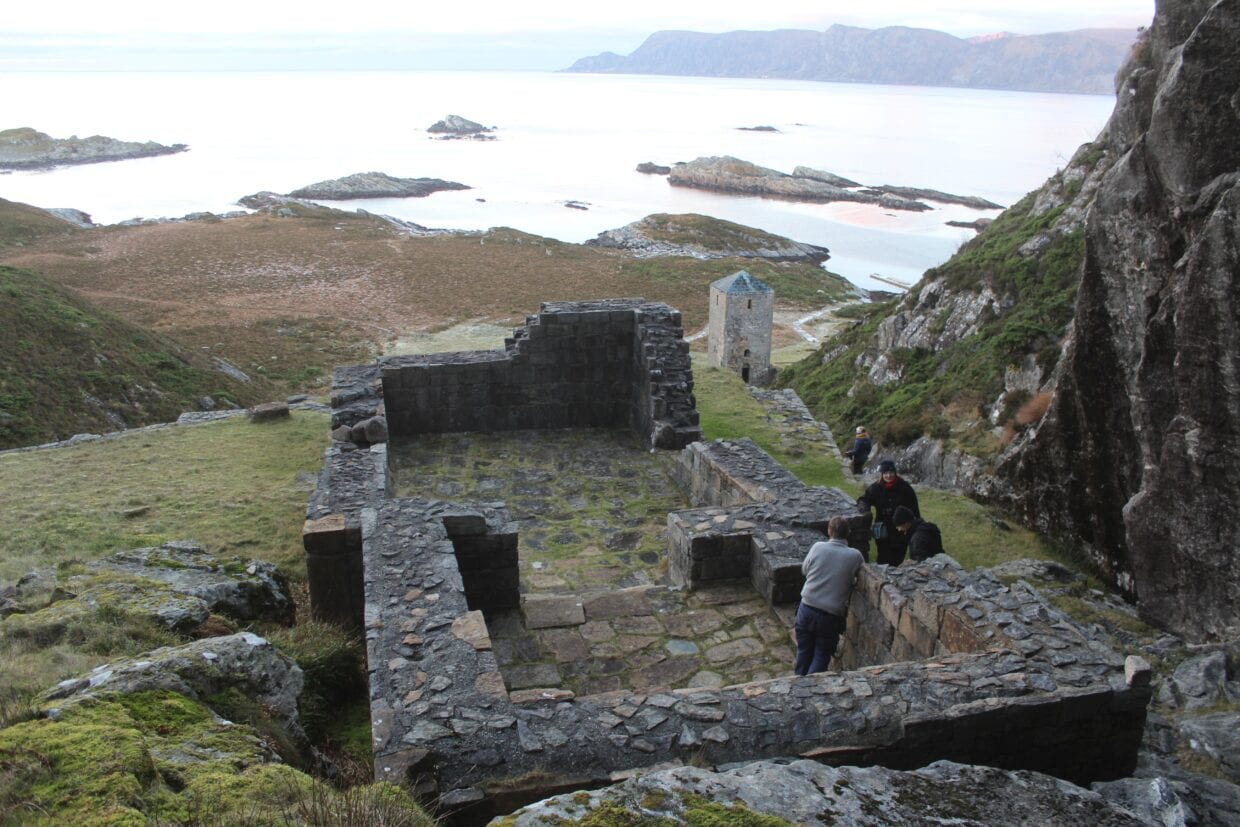
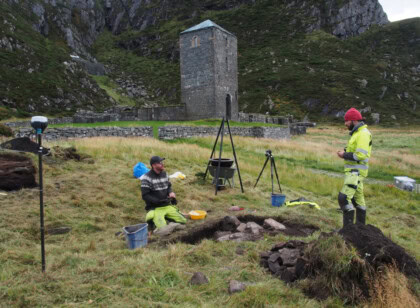
Shortly afterwards, another previously unknown medieval building was identified northwest of the monastery. The discovery demonstrated that significant traces of settlement still survive in areas that had never previously been recorded.
The latest find builds on this research and highlights the considerable potential for new knowledge that still exists on the island.
Digital Technology Reveals the Hidden Past
These discoveries are the result of close collaboration between NIKU’s building archaeologists and specialists in digital archaeology. Using new documentation methods, terrain modelling, remote sensing, and detailed analyses of the landscape and ruins, researchers are able to identify traces that previously went unnoticed.
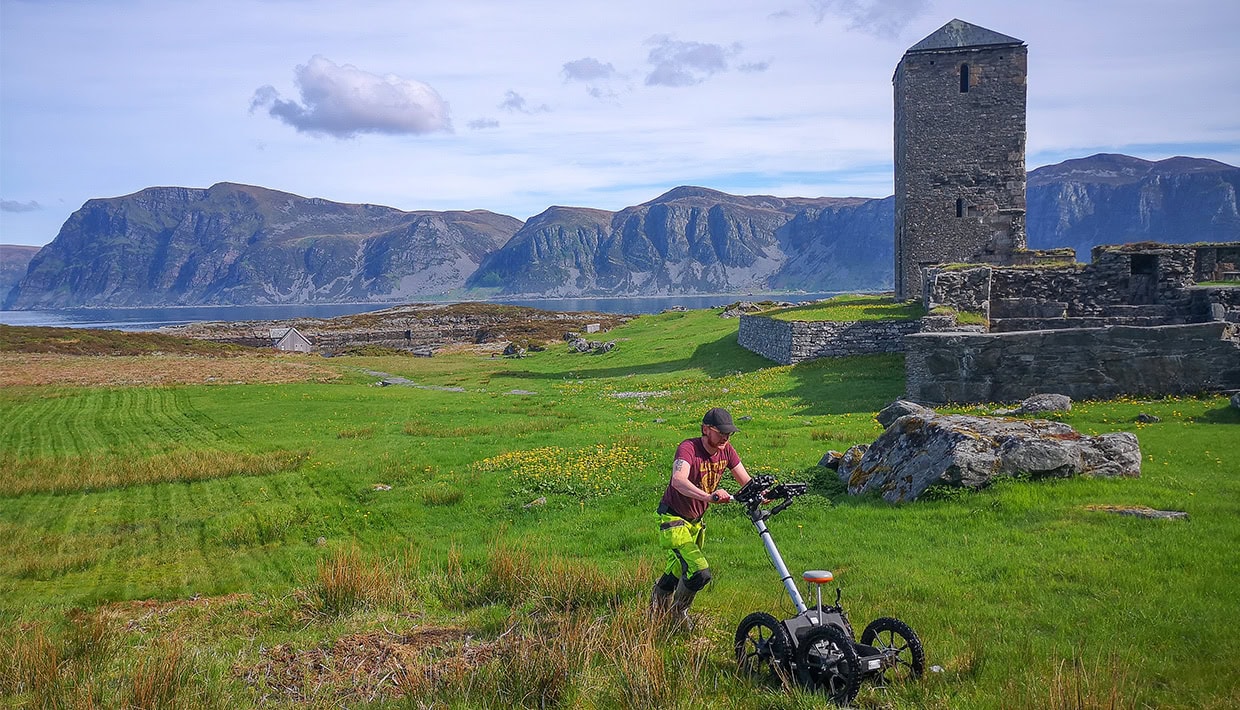
These methods make it possible to re-examine well-known cultural heritage sites and view them from entirely new perspectives.
“Selja is a good example of how even among Norway’s best-known medieval sites, important stories are still waiting to be discovered,” the archaeologist points out.
A Broader Picture of Medieval Selja
This year’s discovery contributes to a more nuanced picture of life on Selja. While research has traditionally focused on churches, monastic buildings, and pilgrimage activity, the new evidence points to a broader area of activity whose functions are not yet fully understood.
“This shows that we still know only part of Selja’s story. The discoveries provide insight into activities that took place beyond the monumental buildings and raise new questions about the people who visited, lived, and worked here,” says Meyer.
He now hopes that further funding will make it possible to excavate the walls and display them alongside the rest of the site.
Feel free to use any photos in this article as long as it is credited the photographer and/or Norwegian Istitute for Cultural Heritage (NIKU).