


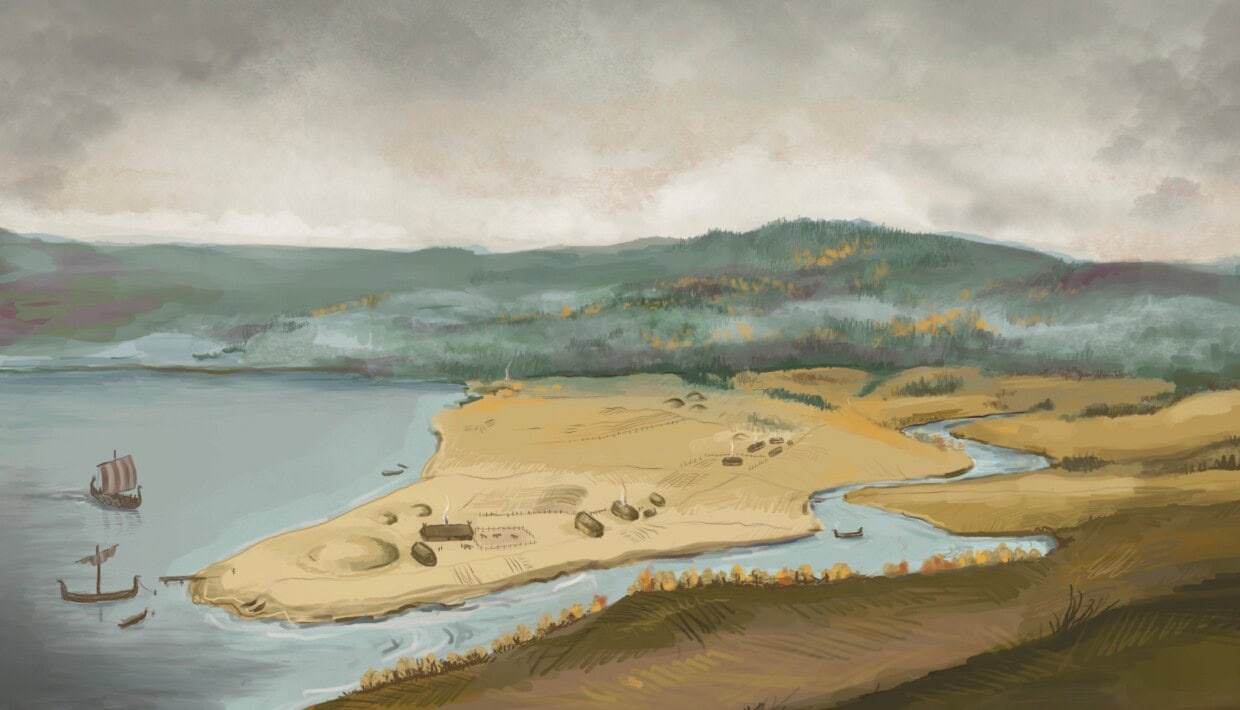
New discoveries show that Oslo’s royal manor was built over a Viking Age boat grave
Hundreds of boat nails discovered during excavations in 2023 have given archaeologists reason to fundamentally rethink the founding and early history of Oslo. What for decades has been interpreted as a medieval fortress beneath the royal estate, may instead be the remains of a Viking Age boat grave, constructed around a hundred years before the city was formally founded.
When archaeologists began excavating near the ruins of the royal estate in Oslo’s Old Town in 2023, they were not prepared for any major surprises. The area was already well known from previous investigations.
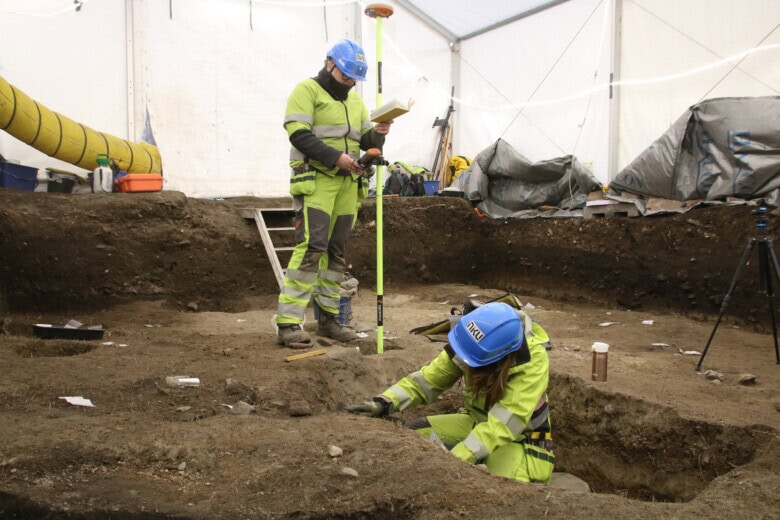
However, something emerged from the soil that would lead to a new interpretation of Oslo’s origins: several hundred complete and fragmented clinker nails.
In a new publication, Michael Derrick and Knut Paasche from the Norwegian Institute for Cultural Heritage Research (NIKU) challenge the traditional narrative of Oslo’s foundation by demonstrating that the area functioned as a strategic centre of power long before 1048.
A fortress beneath the royal estate?
The story begins in the early 1960s. when archaeologist Oluf Olsen unearthed the remains of a circular earthen mound and surrounding ditch beneath the remains of the 13th-century royal manor. Inside the mound archaeologists found a small coin hoard dating to the mid‑11th century.
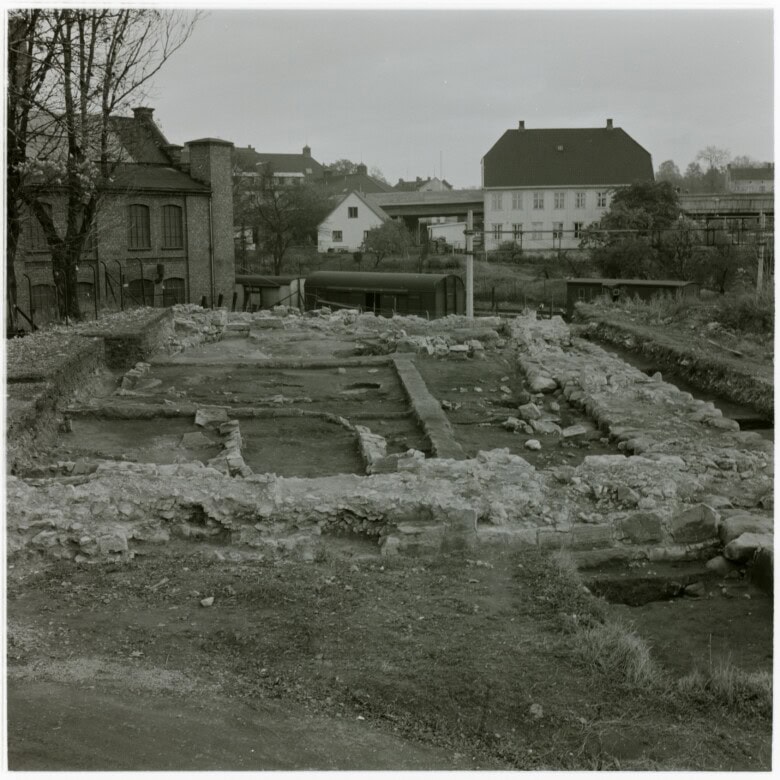
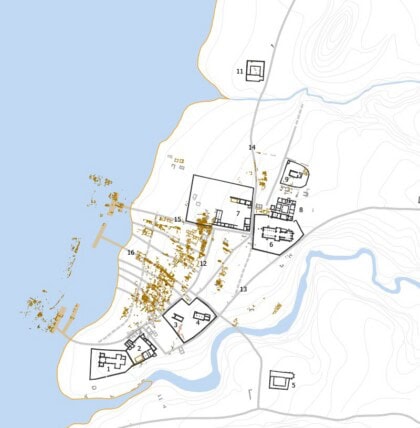
The coins were immediately seized upon as evidence for Harald Hardrådes establishment of the town, which the sagas tell us occurred around 1048. As a result the mound and ditch were interpreted as being the remains of a motte‑and‑bailey castle, an early medieval fortification consisting of an earthen mound and a palisade.
The mound itself was never scientifically dated, and the documentation from the 1960s was fragmentary. Nevertheless, the fortress interpretation remained accepted for decades.
Something about this interpretation did not add up
In 2023, excavations close to the area excavated by Olsen unearthed new archaeological evidence which begun to undermine the motte and bailey theory.
Excavations revealed traces of settlement activity dating to the 6th, 7th and 8th centuries, long before Harald Hardrada ruled. The discovery of these early deposits provided the possibility that the mound and ditch were perhaps older than the medieval town itself.
“If you examine the construction itself, you find a great deal that does not fit the motte-and-bailey -theory,” says Michael Derrick.
Derrick, an archaeologist and researcher at NIKU, took part in excavations at the royal manor in 2023. During the post‑excavation phase, he had the opportunity to examine both the new finds and the archival material from the 1960s.
The more he investigated, the more anomalies he found.


“The ditch is shallow, only about half a meter deep, and the mound is small compared to known motte and bailey sites in Europe. There are no known examples of such structures in 11th‑century Scandinavia; motte‑and‑bailey castles appear in Denmark only much later, during the 12th and 13th centuries.
One detail in particular pointed towards an alternative explanation: the coins that dated the mound to the mid‑11th century were found in a small pit dug down into the top of the mound. In other words, the partially destroyed mound must have existed before the coins were deposited.
This detail is crucial. The coin hoard has been the strongest evidence that Harald Hardrada actually founded the city in 1048, and that this was his fortress.
The final nail in the coffin for the fortress theory
The decisive shift occurred during the most recent excavations at the royal estate, when 91 intact clinker nails and hundreds of fragments were recovered from layers associated with a medieval palisade, as well as from the mound material itself.
Many of them could be identified as clinker nails used to fasten overlapping planks in clinker‑built boats or ships.
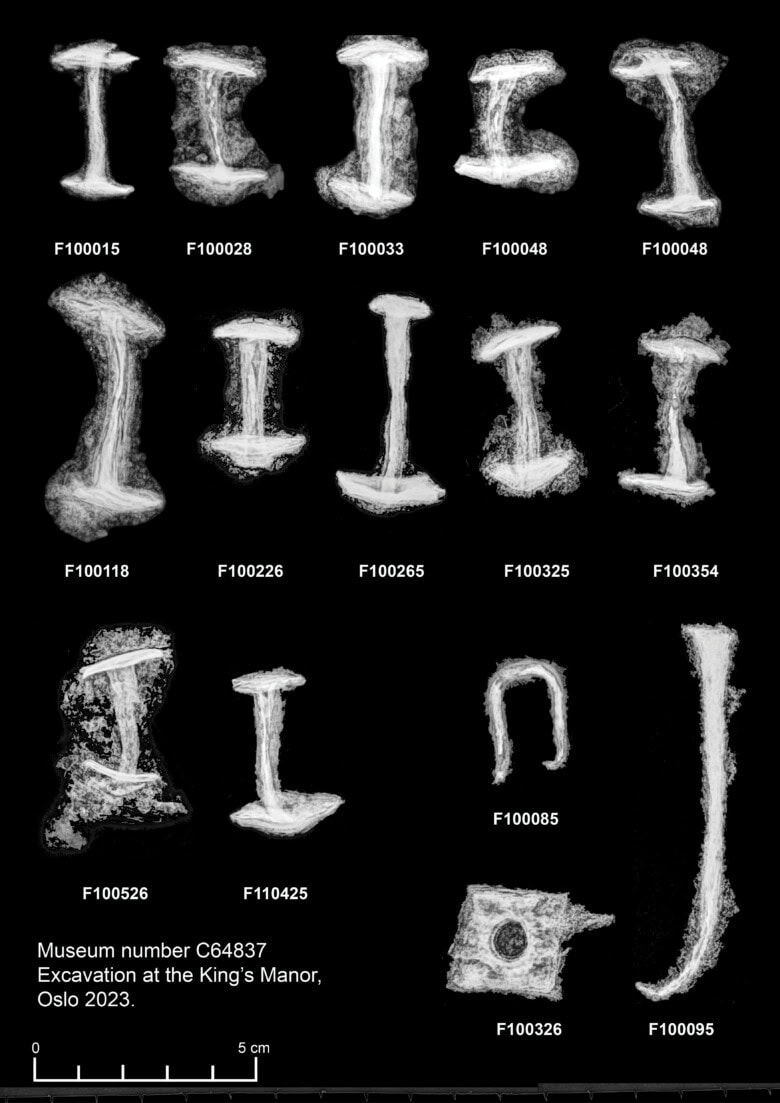

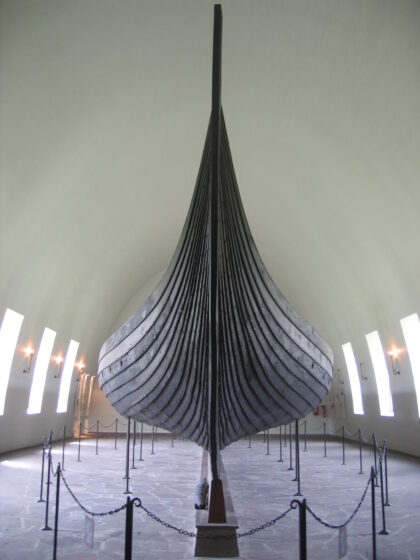
When Derrick returned to Oluf Olsen’s field diaries from the 1960s, new and surprising information emerged. Olsen, too, had found extremely large numbers of nails, but only a few were collected and analysed. In his notes, he describes “large quantities” and “clusters” of nails that were later discarded.
“In total, more than 1,100 nails and nail fragments were recovered from the mound, many of which were clinker nails.,” Derrick explains. “Such quantities found in such a confined area are very difficult to explain in any other way than as the remains of a vessel.”
The nails show no signs of damage caused by extraction, as would be expected during repair or dismantling of boats. The area also lacks the metal waste typically found on ship and boat building sites. In addition, archaeological evidence shows that nails were not used in the construction of wooden buildings and streets in medieval Oslo with wooden pegs being preferred.
Everything points in one direction: the nails derive from a boat, or possibly several boats, that once lay within the mound.
A boat grave by the fjord
The mound measured approximately 25 metres in diameter, large enough to contain a sizable rowing boat or a small ship.
As Derrick is not a specialist in maritime archaeology, he brought the clinker nails to Knut Paasche, an expert on Viking ships and head of the Digital Archaeology Department at NIKU.
In recent years, the department has identified several Viking Age boats and ships using ground-penetrating radar, including the Gjellestad ship in Halden municipality, the Edøy ship on Smøla, and a boat at Øyasletta in Kvinesdal.
Paasche reviewed the nails and was able to determine that they represent at least one vessel:
“The variation in rivet sizes may indicate that there was more than one vessel within the mound, as is the case at other Viking Age graves such as Gokstad and Avaldsnes,” says Paasche.


Radiocarbon dating of material from the destroyed mound places it in the late Viking Age, probably towards the end of the 9th or the beginning of the 10th century. There were no traces of a grave, however, the absence of burnt bones and burnt nails may indicate an inhumation burial, in which the deceased was laid to rest in a boat.
“The location also makes sense. In the Viking Age, the area lay close to the shoreline. A burial mound lying on a promontory, facing the fjord would have been highly visible to passing traffic and functioned as a clear statement of power, belonging and control over the landscape and communication routes,” he says.
From burial mound to centre of power and a new perspective on Oslo’s origins
Over time, the mound was gradually destroyed. First partially during the Viking Age, and later more systematically when the area was developed in the medieval period. In the 11th century, a wooden palisade was erected over the remains, and in the 13th century the stone royal manor was built on the same site.
Derrick says the archaeological evidence points to a pattern well known in Scandinavia:
“New powerholders reuse old monuments, consciously or unconsciously, and assign them new functions. The coins deposited in the mound during the 11th century may have marked a transition from grave and memorial to defence and trade.”
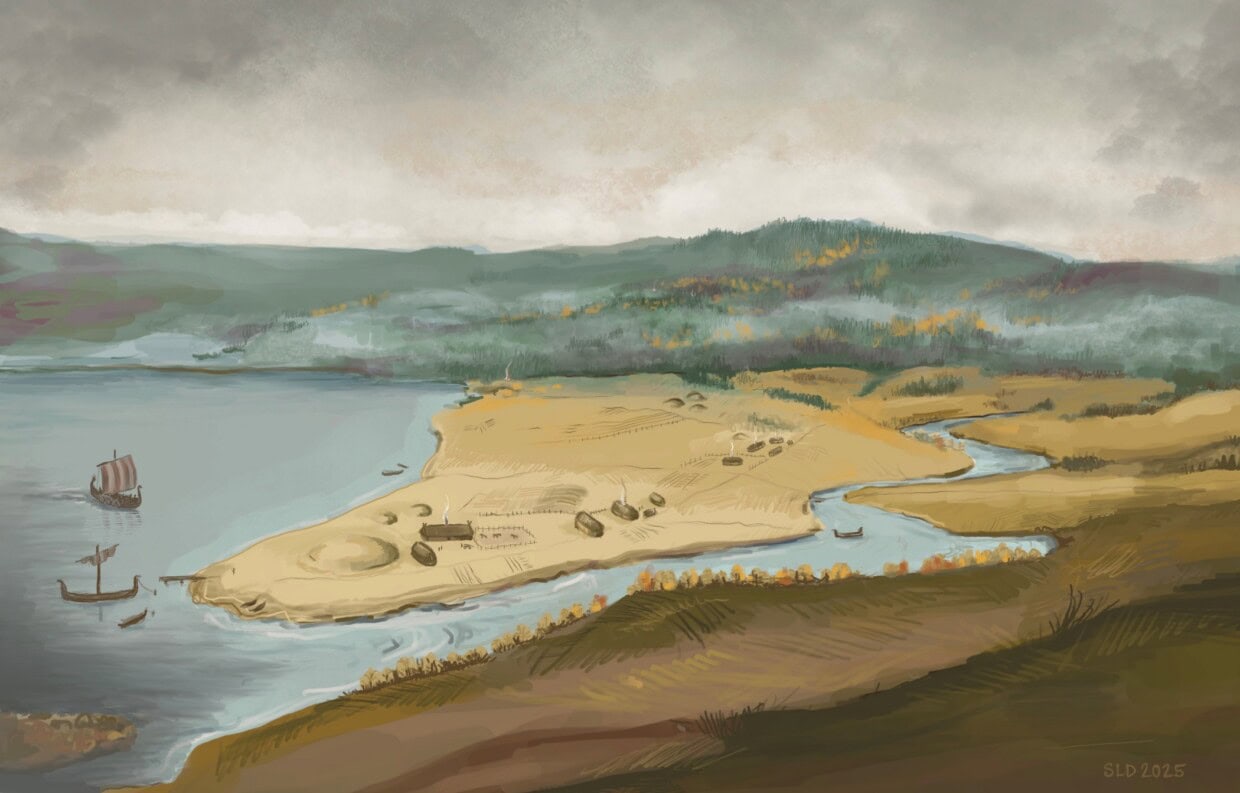
The new interpretation challenges more than just the understanding of a single mound. It questions the very narrative of how Oslo came into being.
“Evidence indicates that the town founded by Harald Hardrada in the mid‑11th century was established on a site which already had a well‑developed settlement founded by local elites who utilised the land and sea and practiced their rituals,” Derrick concludes.
The clinker nails found beneath the royal manor remind us that Oslo’s history does not begin with Harald Hardrada but stretches much further back in time. Before Oslo became Oslo, the plain beneath the Ekeberg ridge was marked by a mound that we now know contained a boat. In its own time, this monument communicated ownership and continuity of power to everyone sailing into the fjord. Perhaps that is why Harald Hardrada chose this very spot.