



The Idea That Medieval Women Bled Freely Without Protection Is a Myth
Menstruation is mysterious, stigmatised, and rarely mentioned in historical sources. To understand how women handled this bloody challenge in the Middle Ages, we need to look at archaeological material. Archaeologist Sunniva Wilberg Halvorsen has studied sanitary products from a medieval latrine in Tønsberg.
Halvorsen, who works at the Norwegian Institute for Cultural Heritage Research (NIKU), has reviewed textile finds from an excavation in Tønsberg and examined earlier discoveries and references to menstruation in archaeological research.
For the first time in Norway, traces of what may be menstrual blood have been identified on medieval textiles.
In her article Medieval latrine textiles from Rådhusgaten in Tønsberg, Norway in Archaeological Textiles Review, Halvorsen discusses the findings.
The Myth of Free Bleeding
The Great Norwegian Encyclopedia states: “Menstrual protection was long unknown. The blood was allowed to flow freely and dry on the body or clothing, or drip onto the floor […]”.
The idea that women bled freely is a myth:
“It’s hard to reconcile the idea of free bleeding with the medieval stigma around menstruation and the high value of clothing,” the archaeologist says.
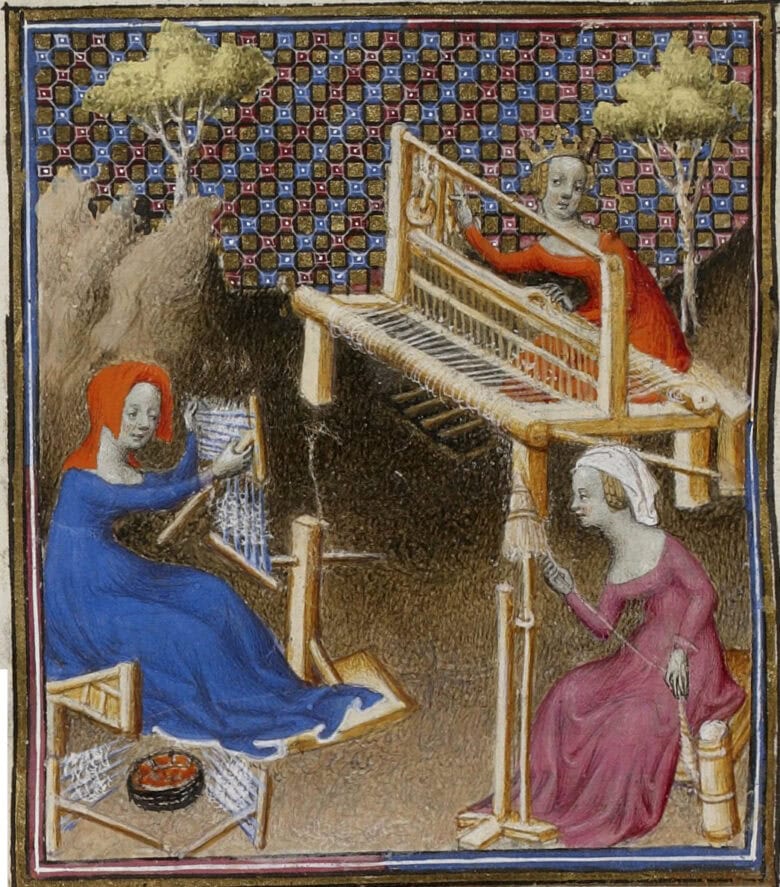
Textiles were costly and time-consuming to produce. Considering the entire process—shearing wool, washing, carding, spinning, weaving, fulling, dyeing, and sewing—it could take as many as 1,000 hours to make a simple wool dress.
Halvorsen finds it unlikely that women, who were mainly responsible for making these garments, would bleed directly into their clothing or onto the floor. Washing clothes was also a time-consuming task they did not want more of.
“You couldn’t make a new dress every month.”
Menstrual Blood Could Sour Wine and Enrage Dogs
In the Middle Ages, people had a complex view of the female body, strongly influenced by Christian theology, ancient medicine, and folk magic.
According to Pliny the Elder (1st century CE), menstrual blood had many destructive and mysterious qualities. It could sour wine, make dogs aggressive, damage crops, cause illness or madness, and perhaps worst of all—cause impotence.
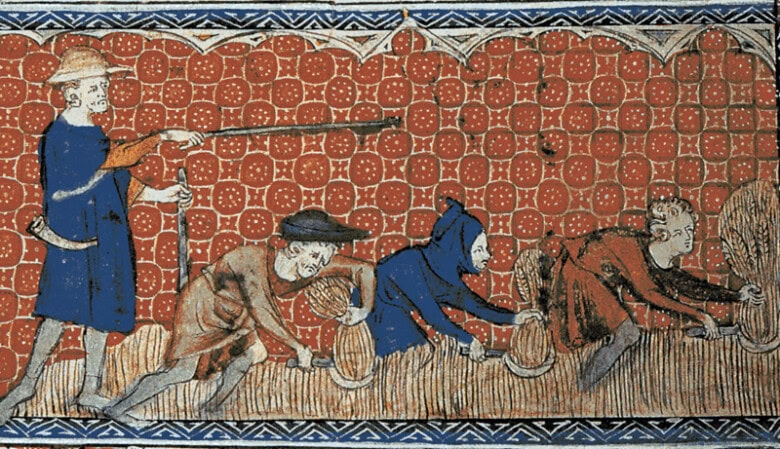
These ideas continued into the Middle Ages, and the Church considered menstruating women spiritually unclean. As a result, women were advised to refrain from certain religious rituals, such as communion.
Menstruation was seen as both unclean and potentially dangerous. This meant women had to navigate practical needs for protection while living in a society shaped by religious beliefs and medical theories that restricted them.
Still, the bleeding had to be managed.
Women Have Used Textiles for Menstrual Protection for Over 2,000 Years
Today we have pads, tampons, period underwear, and menstrual cups. But how did women before us solve this challenge?
The English phrase “being on the rag” refers to cloth rags women used as pads. Although the phrase is from the early 1900s, the practice is much older.
The earliest known references suggest such “menstrual cloths” were used in antiquity, and two early manuscripts of the Book of Isaiah (Septuagint 300–100 BCE, Codex Leningradensis 1008 CE) mention menstrual cloths.
Some medieval sources mention them, but not many. For example, physician Bernard de Gordon said menstrual cloths should be inspected by doctors to diagnose illness, and a 14th‑century document includes menstrual cloths as part of a magical drink, Halvorsen explains.
References increase after the 1500s as more written sources appear.
Most of these writers were men without firsthand knowledge of menstruation—and likely without much interest in the topic.
Due to frequent pregnancies, constant breastfeeding, and a harder life, women in the Middle Ages menstruated on average less than women today. But half the population menstruated, and even if we do not find much about menstruation in the written sources, we should expect to see it in the archaeological material.
Or should we?
Women’s Experiences in the Blind Spot
Hygienic solutions such as pads have been mentioned briefly in several Norwegian excavations, but textile finds have mostly been interpreted as remnants of clothing, packaging, or building material. No one has looked deeper.
“When you excavate, you do it with certain research questions in mind. If you’re not looking for evidence of menstrual management, you might not see it. You might see a piece of textile, but not a pad—or what it says about the people who used it.”
Since archaeology has long been shaped by male perspectives, topics connected to women’s bodies and experiences have received less attention.
This is one area where women’s experiences ended up in the blind spot.
Textiles and Moss in the Tønsberg Latrine
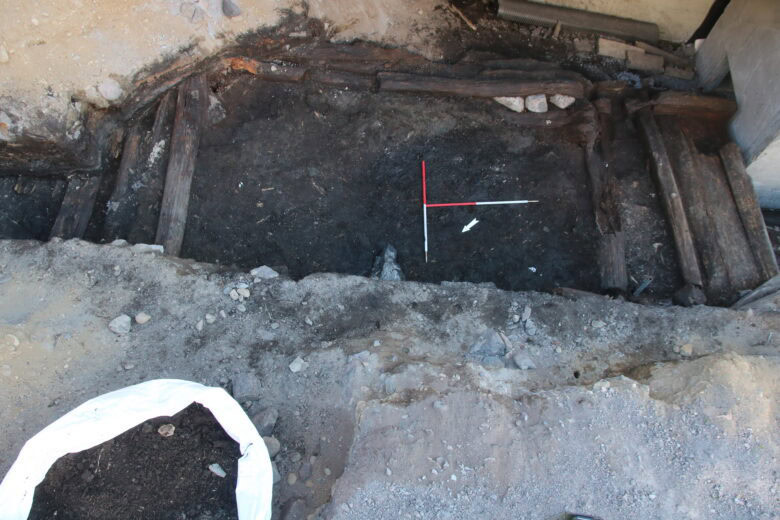
Halvorsen’s material comes primarily from a 13th‑century latrine.
The latrine layer measured at least 4.2 × 2.4 meters which is large for a medieval Norwegian town. Its size suggests it could have been a public latrine, perhaps linked to the harbor, an inn, or several households.
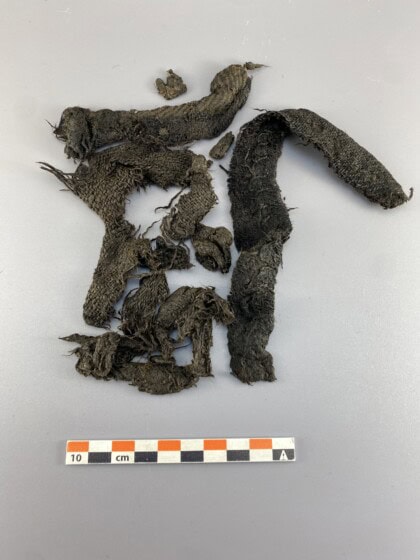
Signs of tearing, folding, and pleating in the textile strips indicate purposeful handling.
“Some of the textiles may have been used as sanitary pads,” Halvorsen says.

Moss was also found. Although moss is often mentioned as a kind of natural toilet paper, Halvorsen points out that its crumbly texture may make it less suitable for wiping.
For a menstruating woman, however, moss—with its absorbency and antiseptic qualities—would be useful for avoiding blood stains.
Sphagnum moss is also known as ‘blood moss’, a name that can refer both to its use in wound treatment and for menstrual absorption.
It seems logical that women used a combination of textiles and moss. Both needed to be held in place.
Menstrual cloths may have been fastened with pins to underwear, but since the use of underwear in the Middle Ages is uncertain, straps or belts may have been more likely.
Analysis Revealed Traces of Human Blood – First Time in Norway
To find out what the textiles had been used for, Halvorsen looked for biological traces.
A selection was sent to a lab for testing for blood residues, hormones, and insect eggs.
One textile tested positive for blood.
One piece contained the stomach contents of flies and fly larvae. Isotope analysis suggested the insects had fed on human blood.

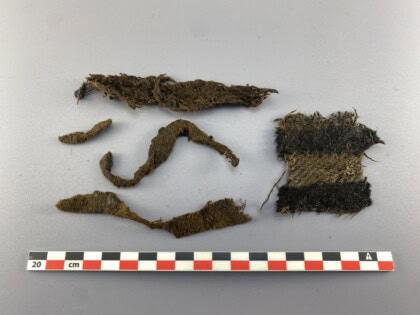
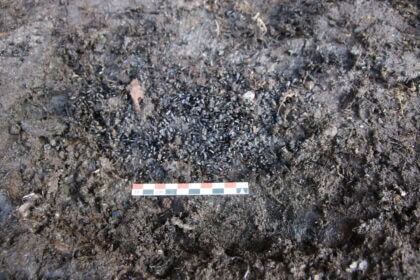
Although these findings cannot completely rule out other uses, such as wiping or wound care, the shape of several textiles makes them likely menstrual pads or fastening bands, perhaps used with moss.
Textile finds were clustered in the northeast corner of the latrine. This may indicate a spatial pattern, possibly linked to use or gender.
However, there were no preserved boundaries showing a physical or social separation. Nor do written or visual sources suggest “men’s” and “women’s” toilets in the Middle Ages.
Here archaeology can reveal parts of life that were never described in text or images, Halvorsen says.
Filling a Gap in Research
The finds offer insight into managing a bodily function that has received little attention in historical literature or research. Medieval sanitary products were likely present in the archaeological record all along, but mostly overlooked.
In her article, Halvorsen shows that menstruation was neither something women “let run freely” nor a topic without practical solutions. It required hands-on management, ingenuity, and shared knowledge—often in spaces men did not enter.
“These are small fragments of textile, but they can help fill a large gap in the research,” Halvorsen concludes.
Sources and further reading
Halvorsen, Sunniva W.: Medieval latrine textiles from Rådhusgaten in Tønsberg, Norway i Archaeological Textiles Review 2025.
Kløkstad, Siri: Menstruasjon i Store medisinske leksikon på snl.no. Hentet 8. januar 2026 fra https://sml.snl.no/menstruasjon.
Munro, John H. A. Textiles, Towns and Trade: Essays in the Economic History of Late-Medieval England and the Low Countries. Aldershot: Variorum, 1994.
Plinius den eldre: Naturalis Historia. 1. århundre etter Kristus.
Barber, E. J. W. Women’s Work: The First 20,000 Years. Women, Cloth, and Society in Early Times. New York: W. W. Norton, 1994.