



Mongolian Herders Face New Challenges — Cooperation Is Key to Overcoming Them
Mongolian herders work together in herding groups known as Khot ail, a form of cooperation that dates back to the 12th century. Today, this traditional system has gained renewed relevance as herders confront climate change and increasing urbanisation.
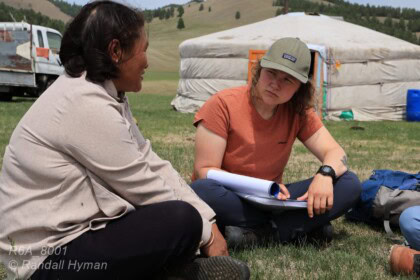
As part of the research project Complexity, funded by the European union, a team from NIKU is studying forms of cooperation among pastoralists in regions around the world.
A central question in the project is how large empires emerge from small herding groups — and to understand that researchers must first understand how these groups collaborate.
This is what led Guro Lovise Hole Fisktjønmo from NIKU to study the khot ail, the traditional Mongolian herding groups.
A High-Altitude Nation Shaped by Mobility
Mongolia is one of the world’s most sparsely populated countries, with just 3.5 million inhabitants spread across vast areas. It borders Russia to the north and China to the south and southeast.
In the summer of 2024, Fisktjønmo conducted fieldwork in Bat-Ulzii in central Mongolia, and in the summer of 2025 she travelled to Tsagaannuur in the far north.

“Although the landscapes were similar in both locations — green river valleys and open plains — there were significant differences among the herders. In Tsagaannuur, herders were generally wealthier, lived more dispersed, and the wealth was more evenly distributed,” she explains.
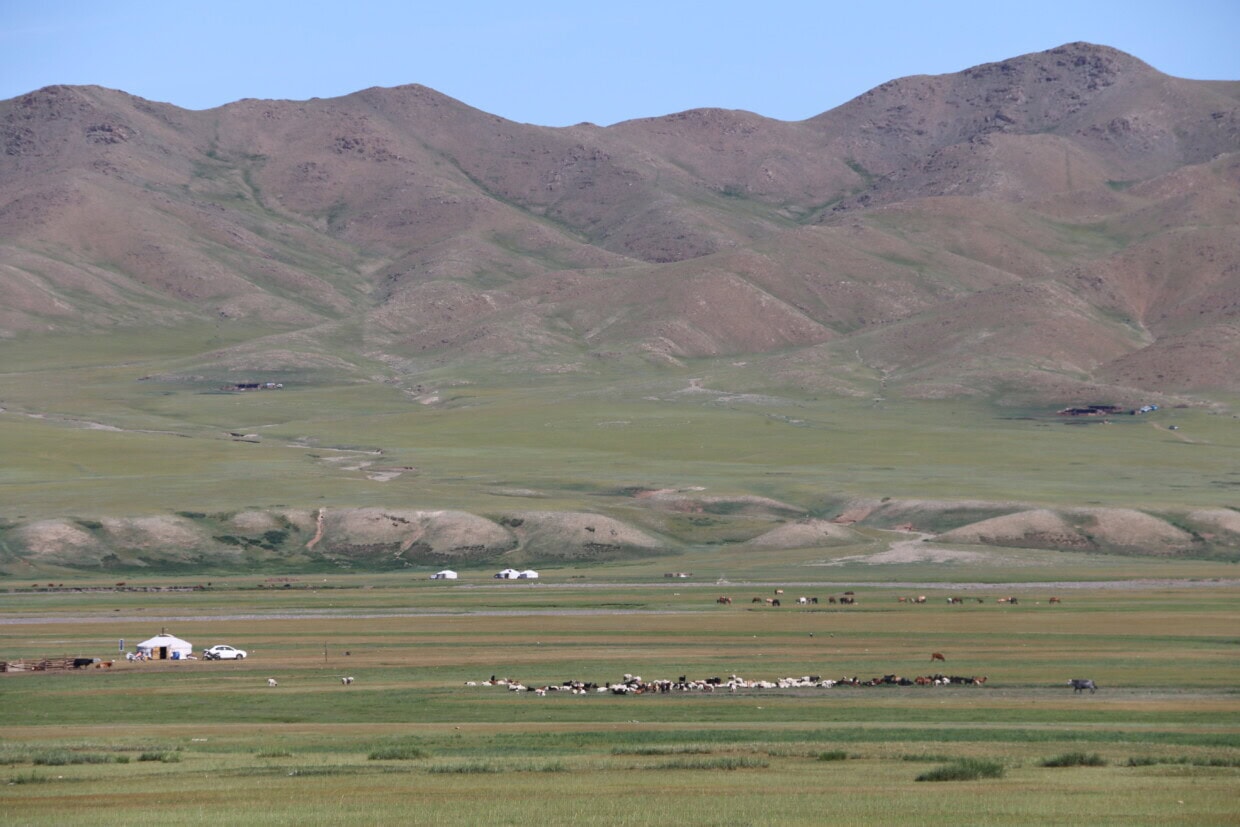
Much of Mongolia lies at high altitude, with extensive plateaus and mountain ranges shaping the climate. Winters are long and dry, while summers are short and warm. In such conditions, pastoralism — moving livestock between seasonal pastures — is often the most viable way to raise animals. It is also a central part of Mongolian history and identity.
A Herding Tradition That Has Endured for Centuries
For centuries, nomadic households in Mongolia have formed flexible groups of two to ten families to share tasks such as herding, seasonal migrations, and childcare — the khot ail. This system resembles the siida structure in Sámi reindeer herding. With roots stretching back to the 1100s, it has survived wars and political upheavals.
During the communist era, collectivisation caused the khot ail to disappear, but the system re-emerged when Mongolia transitioned to parliamentary democracy in 1990.
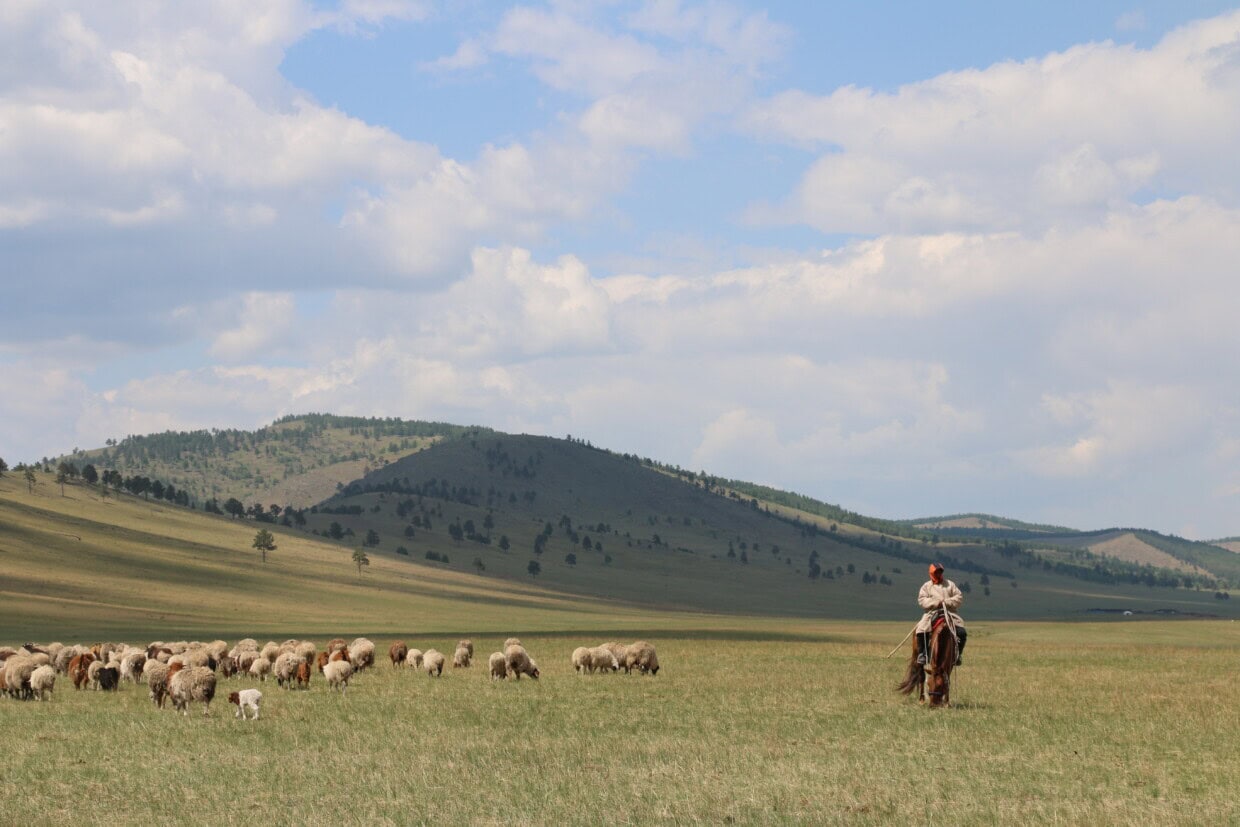
“We know little about how important khot ail is today. But after living with and speaking to Mongolian pastoralists, we see that the system is still very much alive,” says Fisktjønmo.
Shared Labour at the Heart of Herding Life
The greatest advantage of khot ail is the ability to share labour-intensive tasks that are too demanding for a single family to manage alone — such as herding, slaughtering, shearing wool, or moving animals between pastures. Unlike Sámi reindeer herders in Norway, Mongolian herders keep mixed herds of up to five species. Cooperation allows them to divide the animals by species or age when needed.
“The practical aspects of herding are where cooperation is most visible,” Fisktjønmo explains. “And what we’ve seen is that most herders belong to a khot ail.”
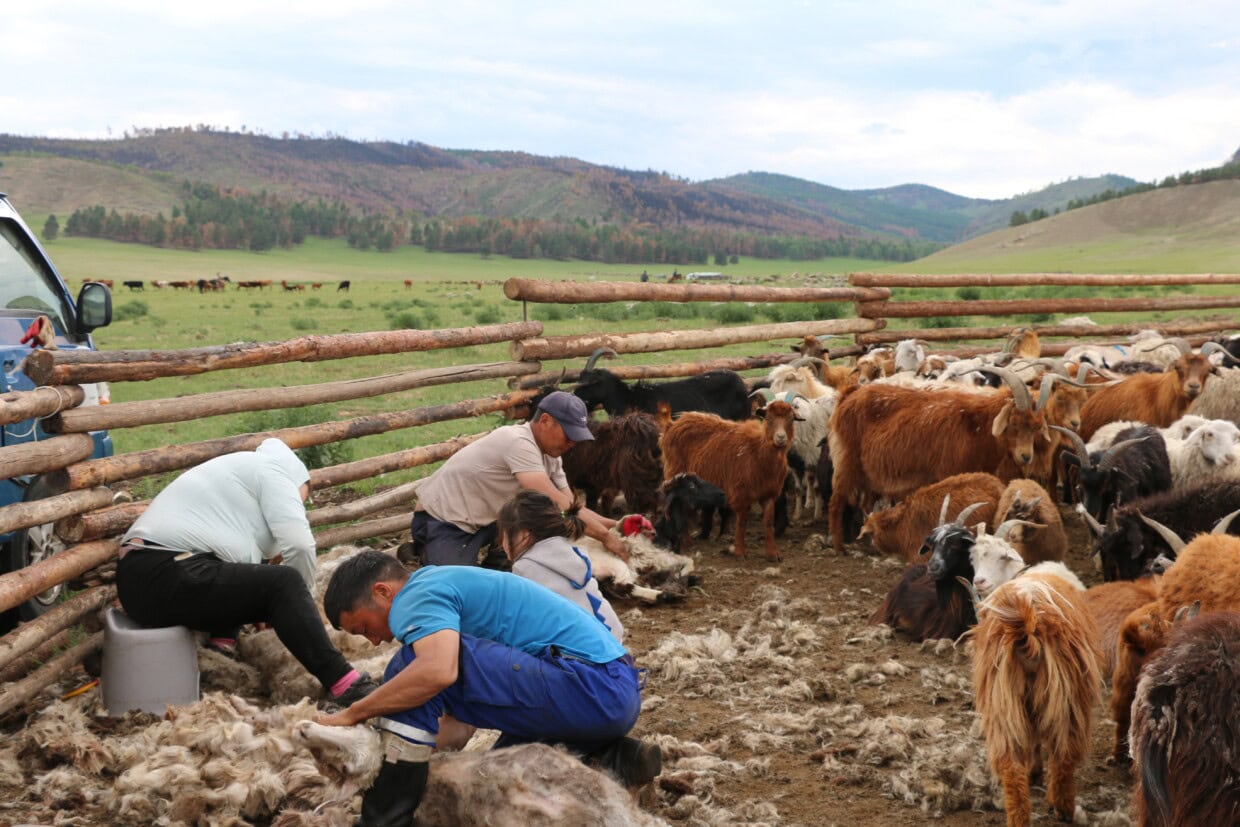
Within some families the cooperation also extends to childcare, milking, and processing animal products. The system is flexible and informal, adapting to needs and circumstances.
Fisktjønmo’s research shows that there is no single model for how a khot ail functions — the extent of cooperation, the tasks involved, and the number of families vary widely across regions and seasons.
“We see that cooperation is important for herders, but it remains uncertain how essential the khot ail itself is for enabling that cooperation.”
Climate Pressures and Social Change Threaten Pastoralism
Pastoralist livelihoods are under pressure from several directions.
“Climate change is causing drier pastures, winter storms, and longer springs — all of which negatively affect livestock survival.”
As grazing conditions deteriorate, many herders move closer to towns in search of better pastures. This leads to overgrazing and reduces opportunities for seasonal movement, which has long been crucial for ensuring enough fodder throughout the year.
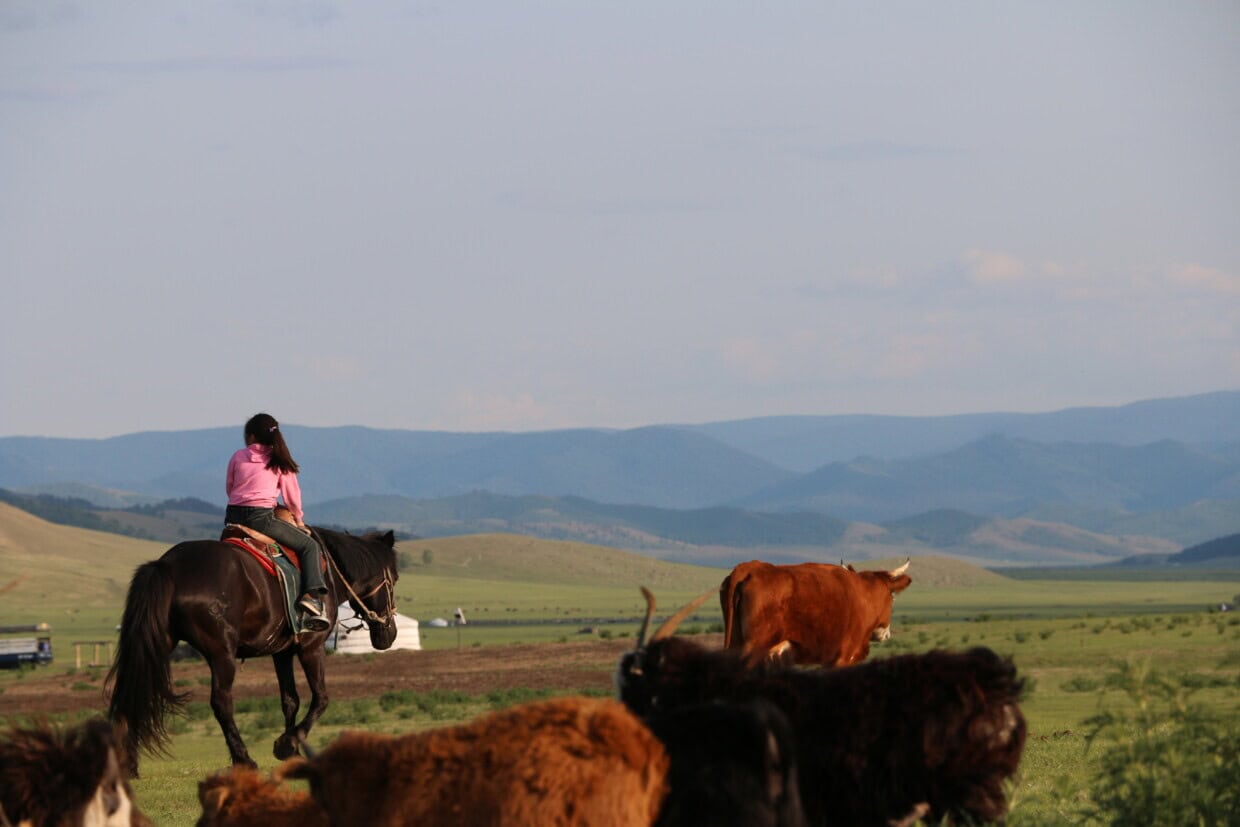

Education has also become more important, often splitting families as children live in town with their mother or relatives during the school year. As a result, they participate less in daily herding activities.
“Climate change, urbanisation, and competition with agriculture and mining create major challenges for Mongolian herders — just as pastoralists worldwide are experiencing. Understanding how they cooperate is vital for safeguarding this way of life.”
Projects funded under Horizon Europe:
Funded by the European Union. Views and opinions expressed are however those of the author(s) only and do not necessarily reflect those of the European Union or the European Research Council Executive Agency. Neither the European Union nor the granting authority can be held responsible for them.
Can Collaboration Secure the Future?
In the face of climate change, overgrazing, and social transformation, cooperation appears to be the key.
“Collaboration between herding families seems essential, but the future depends on how herders adapt to new social and climatic conditions,” says Fisktjønmo.’’